How to Get the Dialog for Htaccess to Pop Up Again
How to edit .htaccess files
The .htaccess file is the local Apache settings certificate that instructs the Apache spider web server how to work with your website. Many useful and interesting things are possible with the settings inside .htaccess, only outset you must know how to create and edit an .htaccess file. This commodity shows you lot how.
Come across the Related Articles section to encounter some of the things you can do with .htaccess once you have learned to create and edit the file.
Using the Plesk File Manager
Plesk is used for the Managed WordPress hosting plan which run on Linux operating systems. These instructions just work for Linux-based installations.
- Log in to Plesk.
If you lot practice not know how to log in to your Plesk account, please see this article.
- If there is more than one domain, roll to the management area for the desired domain.
- Click on the File Manager icon.

- The File Manager will open upward to the root directory for the domain selected.
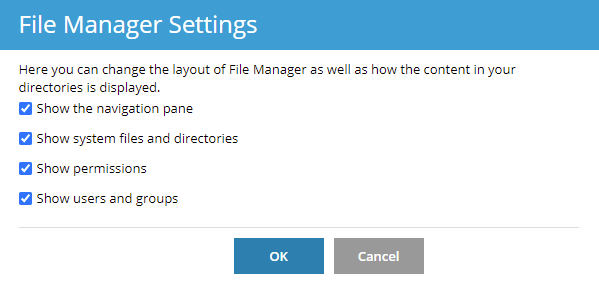
- If the .htaccess file is not visible, click the button at the upper right of the File Manager.
-
In the popular-up dialog box, make sure Testify system files and directories is checked. If it is not checked, bank check the box and so click .
-
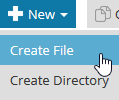
If at that place is still no .htaccess file visible, click the button in the File Manager toolbar and select Create File from the drop-down listing.
-
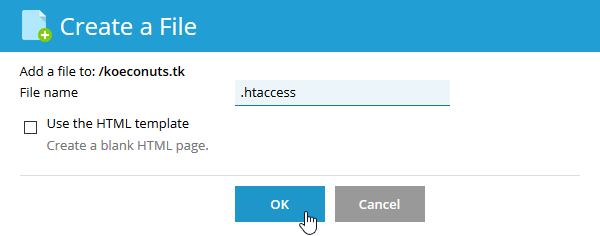
In the pop-up dialog box, enter .htaccess for the file proper noun and click . Y'all should now be able to see the .htaccess file in File Managing director.
-
Click the name of the file to open it in the editor.

The Plesk editor does not accept an undo characteristic. If you are non confident in your editing skills, follow these instructions to brand a fill-in:
- Click the button at the bottom of the editor to create a backup re-create of the file.
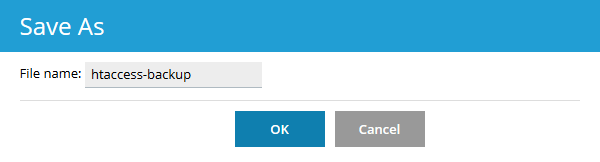
- Give the backup a proper noun in the Save As dialog and click . The editor volition close.
- Click on .htaccess again to re-open information technology.
- Click the button at the bottom of the editor to create a backup re-create of the file.
-
Make any desired additions or changes to the file in the editing area.
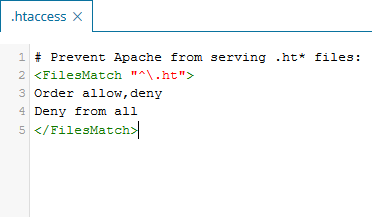
- Click the button at the bottom of the editor.
- Visit the site to make sure everything works as expected.
- Go dorsum to the editor and make corrections or additional changes if needed.
- Click to relieve the changes and close the editor.
Using the cPanel File Director
- Log in to cPanel.
If you lot do not know how to log in to your cPanel account, delight see this article.
- In the FILES department of the cPanel home screen, click File Manager:
-
Click on the public_html binder in the left panel of the File Manager. Files in public_html are shown in the right panel.
-
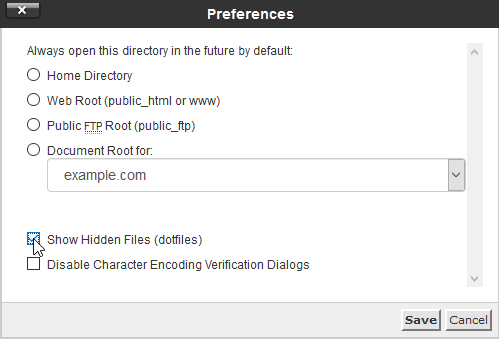
If the .htaccess file is not visible, click the Settings push button at the upper right of the File Manager.

-
In the pop-up dialog box, brand sure Evidence Hidden Files (dotfiles) is checked. If it is not checked, check the box and and so click Save.
- If at that place is withal no .htaccess file visible, click the button in the File Manager toolbar.
-
In the pop-upwards dialog box, enter .htaccess for the file name and click the Create New File push button. You should now exist able to come across the .htaccess file in File Manager.
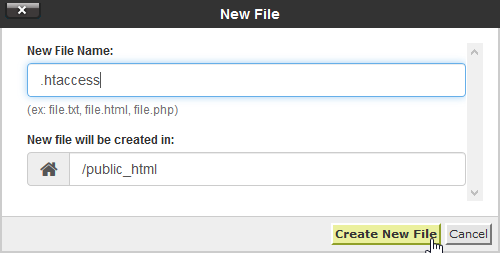
-
Right-click on the .htaccess file in the right-manus pane of File Manager and select from the pop-up menu.
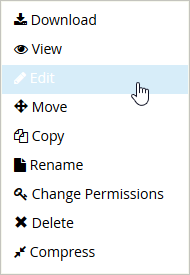
- Click the button on the pop-up dialog box.
-
Make any desired additions or changes to the file in the editing area.
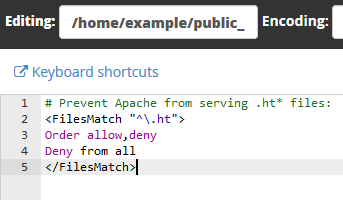
-
Click at the upper correct of File Director.

- Visit the site to make sure everything works equally expected.
- Go dorsum to the editor and make corrections or boosted changes if needed. The cPanel editor has an undo feature so you can hands roll back whatever changes.
- Later your changes are complete, click to salvage any changes and and so click to close the editor.
Using the command line
- Log into the business relationship to be modified using SSH.
If you lot do not know how to utilise SSH, delight see this article.
- Edit the .htaccess file using the Nano editor by entering the advisable control below. If the file exists it will be opened. If the file does non exist, it will be created.
- For Plesk
nano httpdocs /.htaccess -
For cPanel
nano public_html /.htaccess -
For unmanaged servers
nano /var/world wide web/html /.htaccessThe command lines higher up show mutual locations for the websites to be stored for the various platforms. Your site may be in another location. Modify the path (shown in red) appropriately.
- For Plesk
-
Once the file is open, brand whatsoever desired additions or changes to the file in the editing expanse.
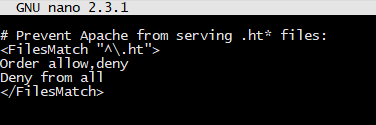
-
Press Ctrl + O to write out the file. Brand sure the File Name to Write is .htaccess. Press Enter.

- Visit the site to make sure everything works as expected.
- Go back to the editor and make corrections or additional changes if needed.
- Subsequently your changes are complete, press Ctrl + O to write out the file. Make sure the File Name to Write is .htaccess. Press Enter.
- Press Ctrl + 10 to exit Nano.
saundersproppracted.blogspot.com
Source: https://www.a2hosting.co.id/kb/getting-started-guide/working-with-linux/editing-htaccess
0 Response to "How to Get the Dialog for Htaccess to Pop Up Again"
Post a Comment